How to Create a Digital Trial Binder Faster in 2026
Learn how to create a digital trial binder faster in 2026. Build once, drag and drop documents, and update in real time with Align's digital case binder platform.
Blog
Binders
Litigation Tools
AI
Best Trial Preparation Software for Litigators in 2026
Not every tool that shows up for “trial preparation software” was built for how litigators work. Here is a clear breakdown of six tools across four categories, and which one fits the full litigation workflow.
Blog
Depositions
Binders
Cross Examination
Litigation Tools
How to Build a Digital Case Binder in 2026: Organizing Transcripts and Exhibits for Trial
How to organize deposition transcripts and exhibits for trial using a digital case binder. Build witness files, subject matter binders, and exhibit organization that starts from day one of the case.
Blog
Binders
AI
Litigation Tools
Depositions
Going Paperless for Trial in 2026: What to Do at Every Stage of Litigation
A stage-by-stage guide to going paperless for trial. Where paper accumulates in litigation and how to replace physical binders with a digital trial binder at every phase from case intake through courtroom presentation.
Blog
Binders
Litigation Tools
The Best Digital Binder Software in 2026: What Litigators Should Actually Look For
Not all trial software does the same job. Compare courtroom presentation tools, bundle builders, enterprise platforms, and purpose-built digital binders to find the right fit for your litigation workflow.
Blog
Binders
Litigation Tools
Why Litigators are Finally Replacing Paper Binders (And what to look for when you do)
Paper binders for litigation break at the worst moments. Learn why litigators are switching to digital — and the four criteria that separate good digital litigation software from generic tools.
Blog
Depositions
Practice Pointers
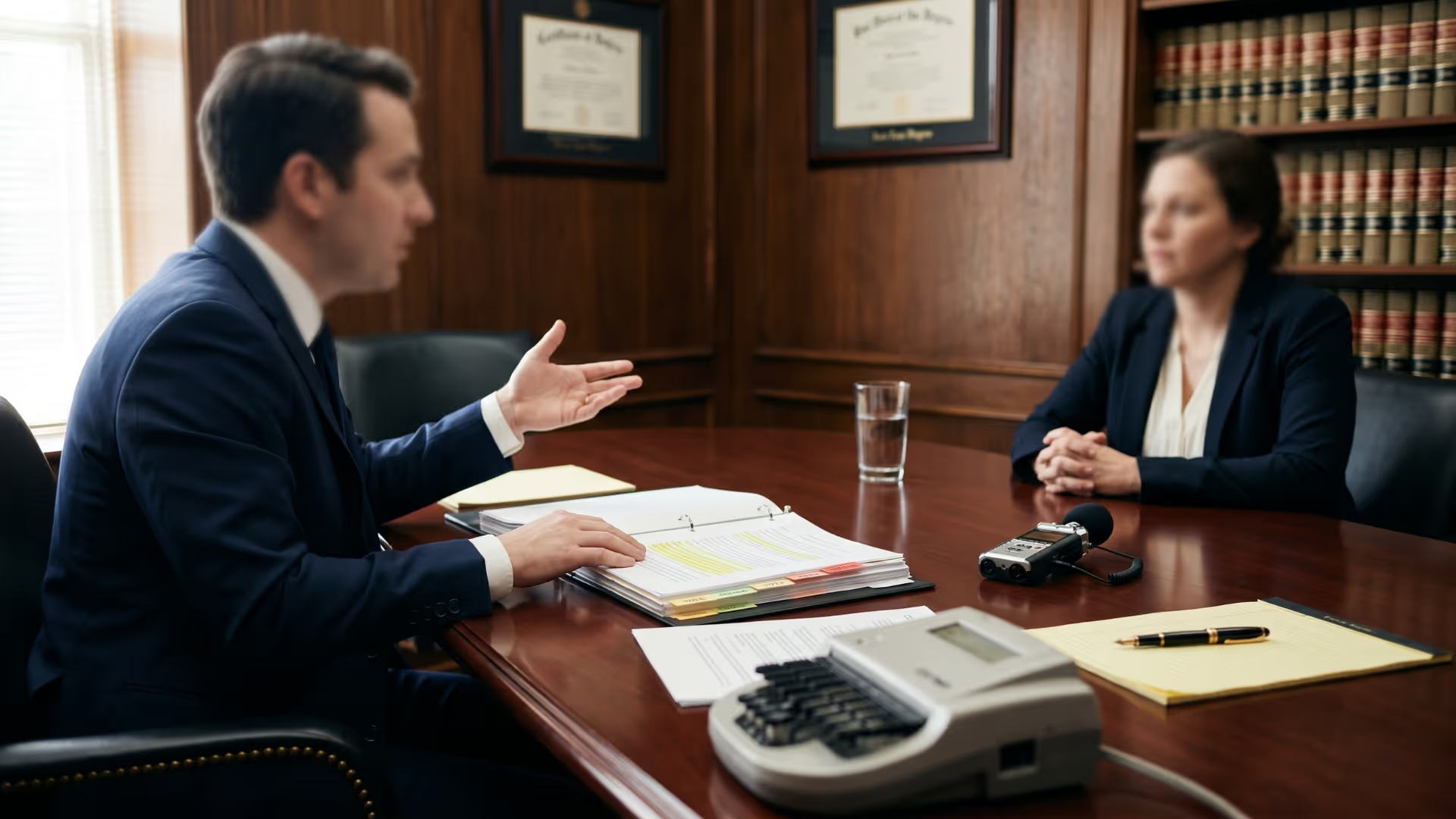
Witness Prep: Figuring Out What To Say
When preparing a witness, don't waste time teaching them combat tactics. Get to the hard stuff.
Blog
Practice Pointers
Depositions
Depositions - Fly the Plane
Handle deposition objections like you handle a snake in the cockpit: ignore the distraction and fly the plane. Don't argue with counsel; simply focus on the witness and get your answer.
Blog
Practice Pointers
Depositions
Depositions - The Three Ps
Effective depositions rely on persistence. Rephrasing and revisiting questions over time usually breaks evasion. Depositions reward stamina, preparation, and practice.
Blog
Practice Pointers
Depositions
Depositions - Carving
When a witness gives a long, muddy answer with an admission inside, it’s unusable for cross-exam. Break the answer into short, controlled questions to isolate clear, precise admissions you can actually use.
Blog
Practice Pointers
Depositions
Depositions - Crystals and Mud
Most deposition questions are “mud” used to move the witness and build context. Stay casual there. When an admission appears, switch to precise, clean questions to extract a usable “crystal” for cross-examination.
Blog
Practice Pointers
Depositions
Depositions - It's About Cross
Depositions are valuable only if answers can be reused on cross-examination. Discovery or motions don’t change that. If testimony can’t become a clean cross question, it isn’t truly usable evidence.
Blog
AI
Too Fast To Benchmark?
Frontier AI models improve so fast that studies comparing them to legal-specific AI become outdated almost immediately. Retesting recent benchmarks shows general models already match or exceed earlier reported gaps.
Blog
AI
Self-Assessing AI Efficiency
Lawyers’ claims that AI makes them more efficient may be unreliable. Evidence shows people often misjudge AI’s impact on their own productivity. Firms should rely on objective data, not self-reported impressions, when de
Blog
AI
Inversion
LegalTech favors “direct” AI control, but its benefits are shrinking as frontier LLMs improve at prompting, workflows, and security. The “inverted” model is viable and likely to gain adoption despite vendor resistance.
Blog
AI
Delegation to AI
Delegating legal work to LLMs can save time but costs learning. Prefer: you read/outline; AI summarizes and fills tedious parts. Ask not only “can AI do it?” but “am I OK not doing it?”
Blog
AI
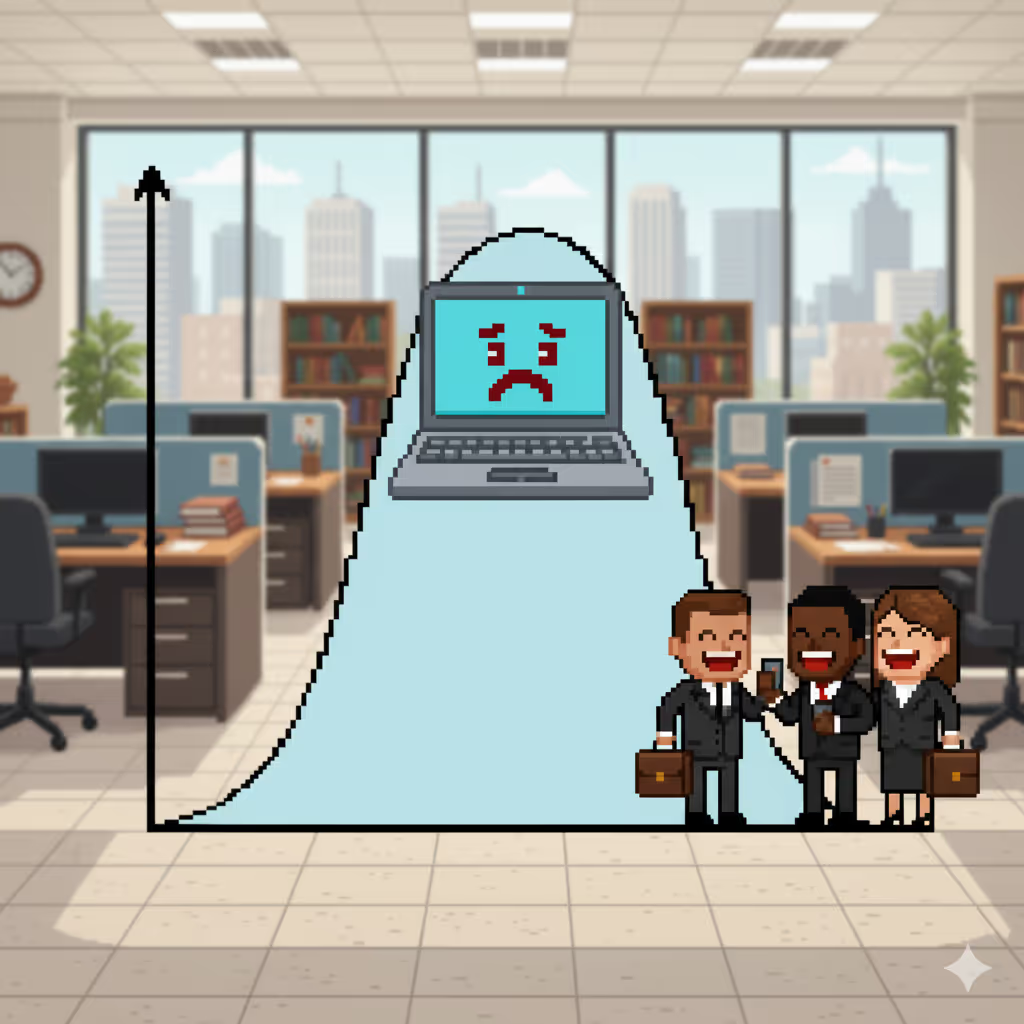
Regression to the Mean
LLMs summarize well but default to average analysis. That makes them useful for baseline work, but not a substitute for the fresh, above-average insight junior lawyers often provide.
Blog
Practice Pointers
Cross Examination
Cross Examination - The Runway
To get clean yes/no answers, don’t start with the impeachment question. Use a series of simple, uncontested yes/no questions as a “runway.” This makes it much harder for a witness to evade the key admission.
Blog
AI
Don't Chat with AI!
Don’t “chat” with AI like a junior lawyer. Long conversations degrade results. When output slips, start a new chat: rephrase, add context, or break the task into smaller steps.
Blog
Practice Pointers
Cross Examination
Cross Examination - Impeach or Refresh?
On minor points, impeachment isn’t always optimal. Refreshing recollection can fix a “light no” while preserving flow, tone, and witness cooperation.
Blog
Practice Pointers
Cross Examination
Cross Examination - Refreshing Recollection
Refreshing recollection is riskier than impeachment but useful when done carefully. It can pressure a witness, correct a denial, and keep control without escalating conflict.
Blog
Practice Pointers
Cross Examination
Impeachment Rules of Evidence
Impeachment is a skill learned by practice, not rules. Learn the mechanics first, then understand how evidence rules—especially hearsay and prior statements—apply.
Blog
Practice Pointers
Cross Examination
Cross Examination - Impeachment
Effective impeachment requires precision, not improvisation. Match prior statements exactly, control the witness through tight logistics, read the contradiction clearly, then move on.
Blog
Practice Pointers
Depositions
Better deposition outlines (3 of 3)
Pasting document clips into your outline keeps everything in one place. It eliminates binder juggling, saves time, and helps maintain rhythm and control during depositions.
Blog
Practice Pointers
Depositions
Better Deposition Outlines (2 of 3)
Writing every question in advance exposes risks early, prevents surprises, and builds disciplined deposition skills. It sharpens judgment before the room, not inside it.
Blog
Practice Pointers
Depositions
Better deposition outlines (1 of 3)
Strong depositions start with disciplined prep. Define clear goals for each outline section to avoid drift, stay focused, adapt in real time, and use limited deposition time strategically.
Blog
Litigation Tools
Transcript Management Software - When do you need it?
Transcript software is essential right before trial for designations and video clips. For most of a case, PDFs or print are faster and more practical for reading, prep, and motions.


.png)



.avif)
.avif)
.avif)