Impeachment Rules of Evidence

June 13, 2025

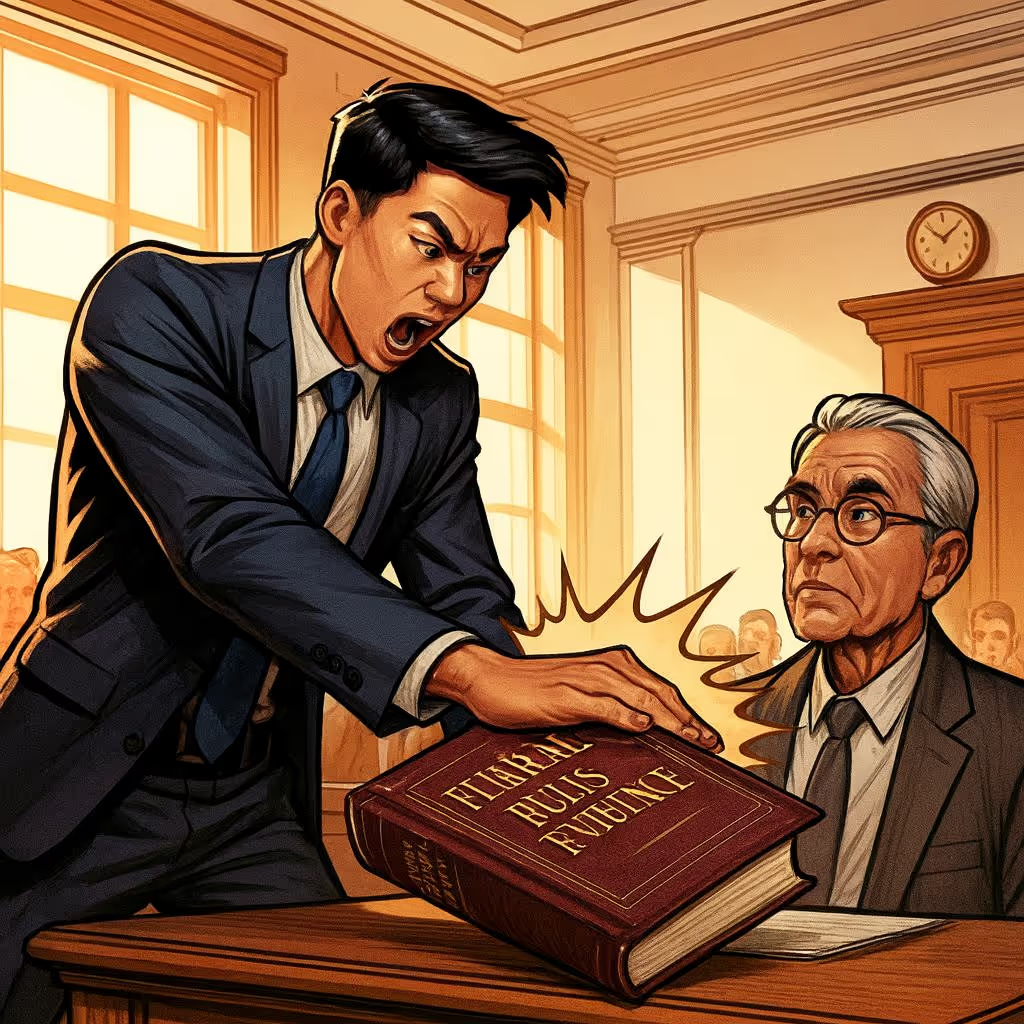
A brief followup on my impeachment post. The rules of evidence. My post, somewhat noticeably, didn't mention them. That was intentional. If you take one thing away from my post it should be that the mechanic of impeachment is something you need to practice and learn the same way you learn to throw a baseball or to play scales on the piano. And just like you wouldn't focus on the laws of physics when learning to throw or on music theory when learning scales, you shouldn't worry about the rules of evidence when learning the skill of impeachment. Just practice.

But that said, at some point, you should be aware of the rules of evidence that govern impeachment with prior statements.

There are three critical ones (in the Federal Rules of Evidence):

  • Rule 613: This is the rule that governs the mechanics. The impeachment technique I laid out satisfies this rule, though it's a worthwhile exercise to think through why.
  • Rule 801(c): Yep, just the plain old definition of hearsay. A lot of impeachment material is hearsay. But that's OK because hearsay is only hearsay if it is offered "to prove the truth of the matter asserted." When you are impeaching a witness you aren't proving the truth of the matter asserted, you are proving the witness didn't tell the truth. So hearsay won't bar you from impeaching with a document, but it will bar you from using the document to prove up its contents. Unless, that is, you fall under...
  • Rule 801(d)(1)(A): This is the rule that says that a witnesses prior inconsistent statement is NOT hearsay if it was made under oath. Accordingly, when you use prior _testimony_ to impeach a witness, the testimony you used is now admissible as substantive evidence for the truth of the matter asserted in it. So if you impeach a witness with testimony from their deposition, that testimony is now as much in evidence as what they said on the stand.

These aren't the only evidence rules that matter. There are some other hearsay exemptions and exceptions that often apply to impeachment materials, e.g., statement of a party-opponent, business record, recorded recollection, but these depend on the specific materials. And technically, Rules 607 and 611 govern the mechanics of impeachment as well.


Latest posts

Binders
Litigation Tools
Blog
The Best Digital Binder Software in 2026: What Litigators Should Actually Look For

Not all trial software does the same job. Compare courtroom presentation tools, bundle builders, enterprise platforms, and purpose-built digital binders to find the right fit for your litigation workflow.

Binders
Litigation Tools
Blog
Why Litigators are Finally Replacing Paper Binders (And what to look for when you do)

Paper binders for litigation break at the worst moments. Learn why litigators are switching to digital — and the four criteria that separate good digital litigation software from generic tools.

Binders
AI
Litigation Tools
Articles
Duly Bound: The Power of Litigation Binders

Binders are everywhere in litigation. Like water, they seem to seep into every nook and cranny of the litigation workflow. Binders line our bookshelves, cover our desks, and fill our suitcases.